Duration
Team Size
Project Type
10 Weeks
Individual
Academic Project
Abstract
The systemic inquiry into the Ease of Doing Business - EoDB Index aims to redefine the objective of the measure by mapping the various aspects, specifically in context of Indian MSMEs. What is the role that India's digital public goods and infrastructure (Aadhaar, UPI, DigiLocker, etc.) has played in the way MSMEs do business.
Adopting a systemic approach to this inquiry, the outcome of this exercise of mapping and unbundling various complexities engaged in this area that pushes and pulls various stakeholders and entities of the system in different directions. After successfully unveiling, a systemic solution set is proposed in order to formulate a system design intervention approach.
Context
What is the current macro state of India? How have we done so far in terms of promoting, supporting and developing MSMEs? What is the current MSME landscape? What lies ahead?
System Visualization
A Comprehensive visualization of the interplay of various forces at work. Presentation of system dynamics, inertia of the system, vulnerabilities and resilience of the system and potential energy of the system using measurable criteria and anecdotal evidence.
Ease of Doing Business (EoDB) Index - Redefined
The existing parameters for evaluating Ease of Doing Business mainly focuses on administrative, economic or governance (either one or combination of these) aspects. While these are essential aspects for starting, operating and exiting businesses, they do not give a comprehensive view of the 'ease' of doing business.
This index still does not account for the socially privileged and certain class of people easily being able to venture into business. There are aspects of cultural nuances, behavioral complexities, market dynamics and business literacies at play that also determine the 'ease' of doing business.
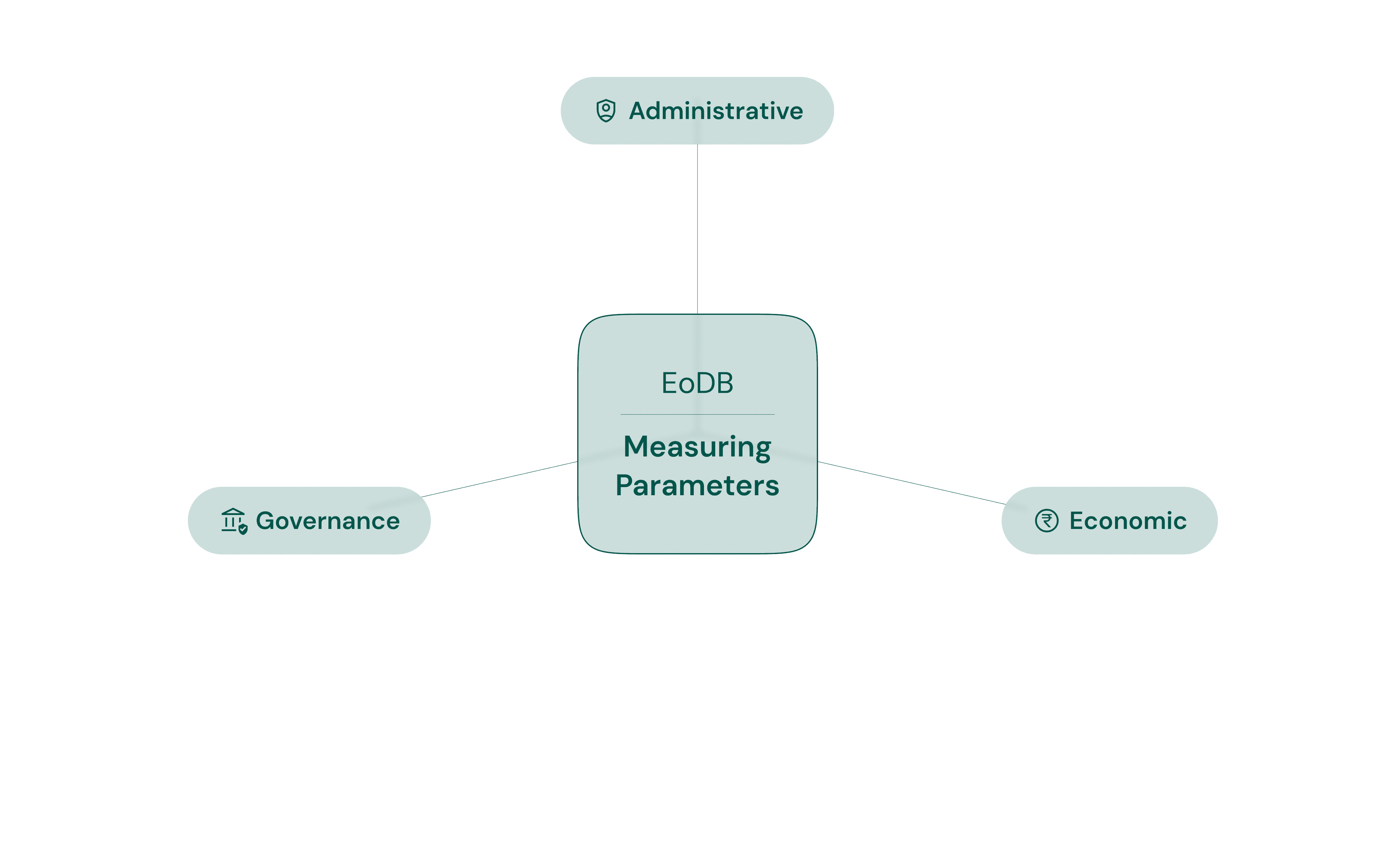
This widening of focus areas for the EoDB Index results into formulation of new parameters to be looked into and evaluated defining a more holistic idea of understanding a business environment in the country.
This index redesign not only serves the government/authorities as a performance indicator but it also helps the MSMEs strengthen themselves, reflect and evaluate their weakness. This index acts as an interface between the government and the businesses.

Starting a Business
Dealing with Construction Permits
Getting Electricity
Registering Property
Paying Taxes
Trading Across Borders
Getting Credit
Protecting Minority Investors
Resolving Insolvency
Enforcing Contracts
Workforce (S/U) availability
b. Essential Business Literacies
c. Access & exposure to continuous learning
d. Civil Execution
e. Access to Raw materials
f. Technology Adoption
g. Social Capital
h. Complexity of (labor & tax) laws
Access to market & Infrastructure
j. Ancillary Industry & Ecosystem
Existing
Parameters
Proposed
Parameters
⬇️ Work In Progress below this point ⬇️
⚠️🚧
Work In Progress
⚠️🚧
Work In Progress
⚠️🚧
Work In Progress
⚠️🚧
Work In Progress
⚠️🚧
Work In Progress
⚠️🚧
Work In Progress
⚠️🚧
Work In Progress
⚠️🚧
Work In Progress
How has DPI changed doing business from the perspective of…
Administration
Governance
Financial & economical
Social & cultural
Behavioral
Business Literacy
Market Dynamics
Who are the vulnerable MSMEs?
Define vulnerability for each type of MSMEs:
Informal: Vulnerable MSMEs are the ones operating informally - out of the grid - of compliance and social security.
Businesses falling out of: special economic zones, industrial parks/areas, industrial corridors or major industry friendly zones that already have some history of business friendliness. This also result into a domino effect - success to successful
Late adopters of technology, upskilling, etc.
…
Intervention Directions
National MSME Policy
Capacity building and development
Democratizing Credit
National Regulatory Compliance Grid